xTool X1 and Bambu Lab R1 Are Chasing the Same Garage
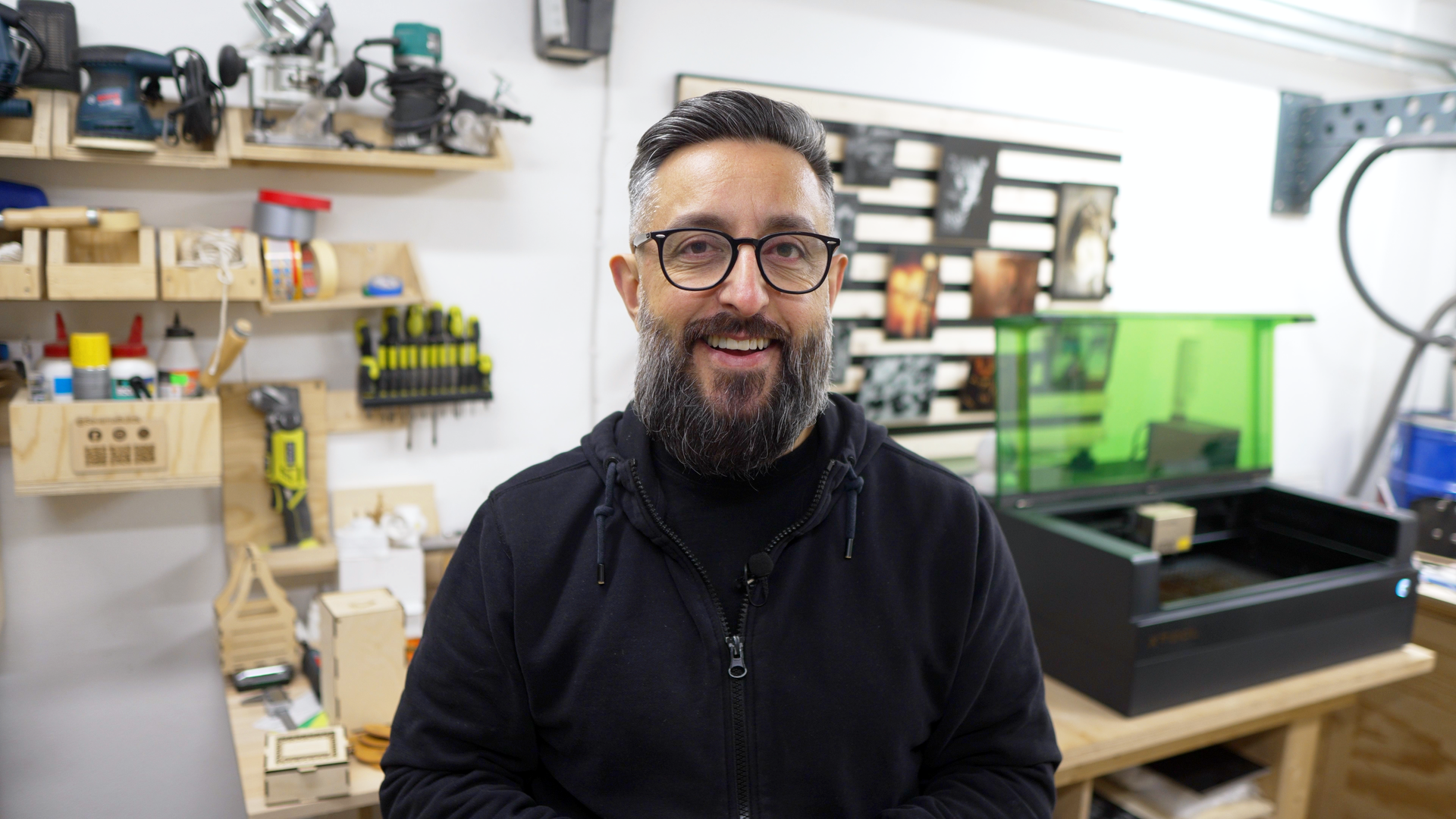
Over the last few weeks, I have spent a lot of time looking at the xTool X1, the upcoming Bambu Lab R1, and where both companies seem to be heading. After the teasers, reveals, software updates, discussions, and reactions from people following these machines, I keep coming back to the same thought.
xTool and Bambu Lab are starting to chase the same garage.
I come at this mainly as a laser enthusiast. I have spent the last couple of years using an xTool S1 40W that I purchased myself, but xTool is certainly not the only laser brand I have experience with. I have also used machines from Sculpfun, ACMER, Ortur, and others, and that has given me a chance to see how different companies solve many of the same problems.
My introduction to Bambu Lab came from another direction. I bought into its 3D printing world with the P2S, and that machine made a strong impression on me. It was well built, delivered consistently good prints, and most importantly for me, made learning 3D printing much easier than I expected.
Later I tested the H2D, including its 40 watt diode laser, and that gave me a much better look at what happens when Bambu brings its approach to laser work. The H2D stayed in my shop after the review, and I kept using it. That probably tells you more about my experience than any review score could.
Now Bambu is stepping directly into dedicated lasers with the R1, while xTool is pushing the X1 as a much broader laser platform. The more I look at both companies, the less this feels like a simple fight between two new machines.
Multi Function Machines Are Not the New Part
Machines that perform several jobs are not new, and neither are swappable heads or modular systems. Companies have been combining engraving, cutting, drawing, printing, and other processes for years. What feels different now is who is doing it and how polished these systems are becoming.
Both xTool and Bambu Lab have shown that they can build machines that feel like finished consumer products instead of projects that expect the owner to sort out half the problems. Their software is tightly connected to the hardware. Cameras, automatic setup, material profiles, calibration, and other conveniences are becoming part of the normal experience instead of something you bolt on later.
That is what makes the X1 interesting to me. The headline is easy enough to understand: one platform can work with several different laser technologies. The base system combines CO2 and diode, while additional modules are intended to bring technologies such as fiber, MOPA, and UV into the same machine. We have seen modular machines before. What we do not normally see is this particular mix of laser technologies brought together under one platform.
If xTool can make those different sources easy to change, calibrate them properly, and let xTool Studio handle most of the complexity in the background, the experience could be very different from owning several unrelated lasers. For somebody working from a small garage, basement, or spare bedroom, I can see the attraction right away.
I went deeper into the X1 reveal and what I think xTool is trying to build here: xTool X1 Revealed. Here’s What I Actually Think
Bambu Lab Is Coming From the Other Side of the Workshop
Bambu Lab has taken almost the opposite route. It built its reputation around 3D printing, and my experience with the P2S helped me understand why the company gained such a following. It made complicated technology easier to approach without making the machine feel cheap or watered down.
The H2D pushed that idea much further by combining 3D printing and laser capability in the same system. I went into that machine as a laser user who was skeptical about putting those two very different jobs together. I came away thinking Bambu had pulled it off much better than I expected.
The R1 takes things another step. Bambu is no longer adding laser capability to a 3D printer. It is entering the dedicated laser market with a CO2 machine. That puts Bambu directly in front of customers xTool already knows very well. Someone shopping for a serious home laser may soon have xTool and Bambu Lab on the same shortlist, even though a few years ago many of us would have placed those companies in completely different categories.
The Bigger Prize May Be the Whole Workshop
This is where I think the real competition starts.
Neither company seems satisfied with selling you one machine. They are building environments around those machines that give you fewer reasons to go somewhere else.
Software is a big part of that. I recently made an entire Halloween sign inside xTool Studio, and what impressed me was not one particular feature. It was how little reason I had to leave the program. I could start from one of the generators, use design elements, edit vectors, prepare the project, save material information, preview the layers, and send everything to the laser from the same place.
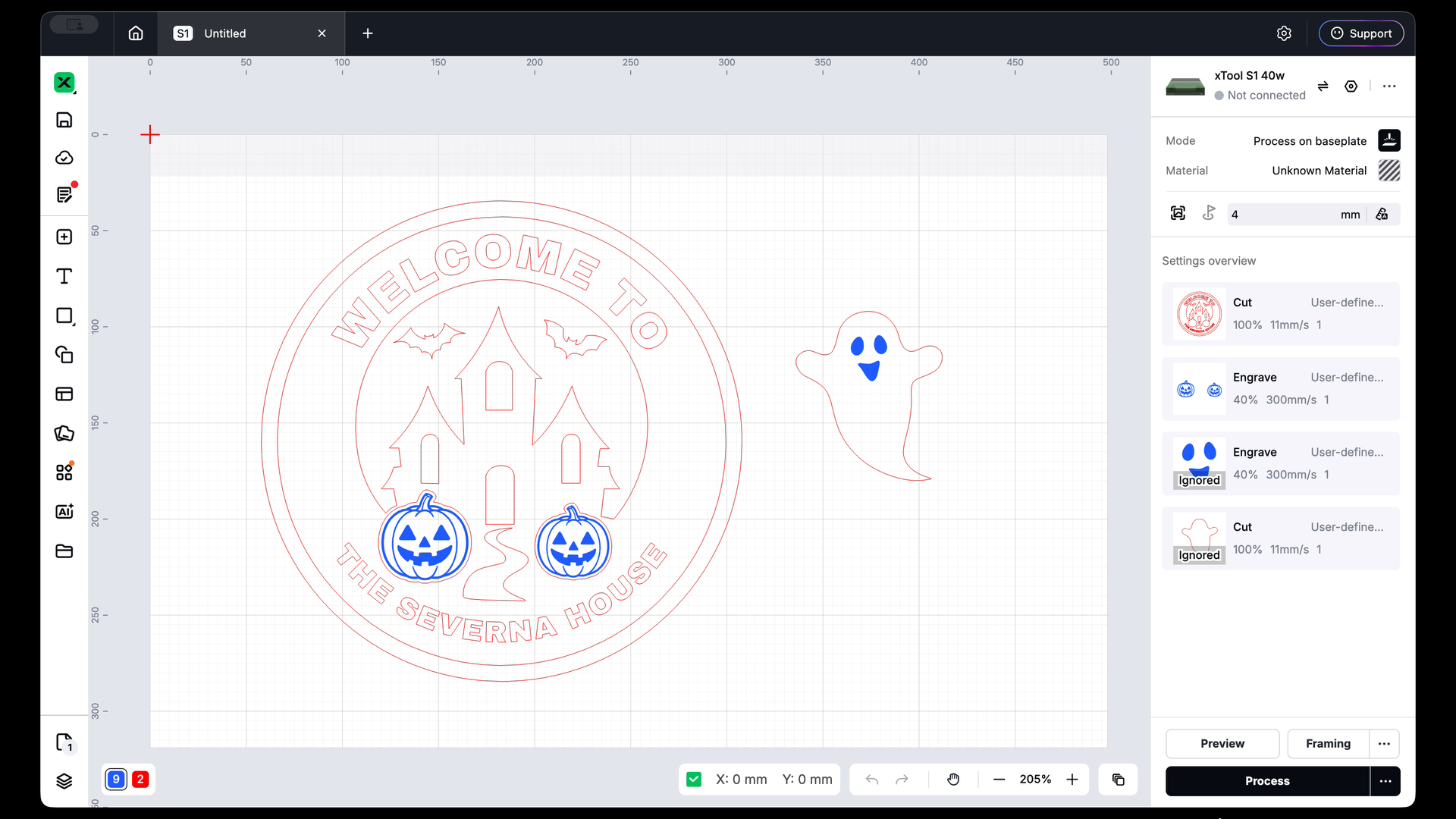
Building the Halloween sign entirely inside xTool Studio gave me a better sense of where xTool is taking the software.
Bambu takes a similar approach with its own software and connected machines. The appeal is pretty easy to understand. You buy the hardware, install the software, and start making things without needing three other programs, another controller, and several evenings of tutorials just to get everything talking to each other. For many hobbyists, that sounds pretty good. It certainly does to me.
My free time in the shop is limited. I would rather spend it making something than troubleshooting a connection or trying to remember which program controls which part of the job. There is another side to that convenience, though.
A One Stop Shop Can Also Become a Walled Garden
The more useful one company's environment becomes, the harder it can be to leave it.
Bambu Lab already knows this controversy well. Parts of the 3D printing community have criticized the company over cloud access, firmware controls, third party integrations, and how closed parts of its environment have become. Some of that criticism is especially sensitive given Bambu Studio's roots in the wider open source 3D printing world.
Bambu has its own arguments around security, reliability, and protecting its services, but the disagreement raises a fair question for customers: how much control do you want the manufacturer to retain after you have purchased the machine?
xTool is not completely free from similar concerns. My S1 does not become useless without an internet connection, but the larger xTool Studio experience increasingly feels designed around a connected shop. Online assets, cloud features, accounts, credits, and some design tools benefit from having solid internet access.
LightBurn is another example. Some xTool machines can use it, but you may not get access to every machine specific feature available through xTool's own software. As the hardware becomes more specialized and more closely tied to Studio, choosing another program can mean giving up some functionality.
There is also the growing use of credits and paid content inside Studio. I understand why premium artwork, AI processing, cloud services, and continued software development need to be funded. Still, if part of the appeal is that I no longer need several other applications or subscriptions, I also want to watch how much of that cost eventually moves inside the manufacturer's own software. The convenience is real, and that is exactly why these ecosystems can become so powerful. Once the machines, software, materials, accessories, and saved projects all work together, leaving becomes less attractive even if another company eventually offers something better.
I described that feeling in one of my recent videos as being trapped in paradise. I like the paradise part. Everything works together, I know the software, and I can get on with making things. I am just not completely sure how trapped I want to be.
Five Lasers in One Machine Still Means One Machine
The X1 brings another tradeoff that is easy to overlook during a reveal.
Putting several laser technologies into one platform can save a huge amount of space, but it does not give you several machines. If I own four separate lasers, I can potentially run more than one job at the same time. One machine could be cutting a batch while another is engraving something completely different. An X1 with several modules gives me more capabilities, but I still have one work area.
For a hobbyist working from a spare bedroom, that may be an excellent trade. For someone running a small business or producing batches, separate machines may have an advantage that has nothing to do with laser power.
There is also redundancy to think about. If I own several independent machines and one breaks, the others keep working. If I build an expensive collection of modules around one central platform and something important inside that main machine fails, several perfectly functional laser sources could become unusable until the base machine is repaired.
Module pricing will make a big difference too. If adding another laser technology costs substantially less than buying another complete machine, the modular approach becomes much easier to justify. If each module turns into another major investment, buyers will need to compare the space savings against the flexibility and redundancy of separate machines.
I also keep coming back to the base configuration of the X1. The platform starts with CO2 and diode whether both technologies are important to you or not. For my own projects, a strong diode handles most of what I currently do. If I were building a system around my needs, I might rather start with diode and add UV or MOPA than pay for CO2 first.
So while the X1 is modular, it is not completely configurable from a blank slate. You are still buying into xTool's idea of what the foundation should be.
The Question I Keep Coming Back To Is Ownership
These machines are becoming incredibly capable, but they are also becoming more complicated and more proprietary.
Modern systems rely on specialized control boards, cameras, sensors, calibration systems, firmware, software, cloud services, and parts designed specifically for that platform. That makes me think less about what ownership looks like during the first six months and more about what it looks like five years later.
If a specialized component fails, will I be able to buy it? Can I replace it myself? Will the manufacturer still support that model? Will the software still recognize it? If a feature relies on a cloud service today, what happens if that service changes or disappears later?
I do not think it is reasonable to assume the worst, and I have no evidence that xTool or Bambu Lab plans to make major machine functions dependent on future subscriptions. Asking how much control remains with the owner is still fair, especially when these machines can represent a serious investment.
A several thousand dollar laser is not something I want to think of like a phone that gets replaced every few years. The more functions we consolidate into one platform, the more important repairability, parts availability, software support, and long term service become.
The Competition Is Good, but the Buying Decision Is Changing
Two companies with strong engineering teams competing for the same customer can push this entire category forward. Better cameras, easier calibration, stronger software, cleaner machines, simpler setup, and more capable laser systems are all things I want to see. What has changed for me is how I think about buying them.
Power, speed, work area, and price are still important, but they no longer tell the whole story. Software, repairability, module pricing, cloud dependence, long term support, available accessories, and the ability to move outside the manufacturer's environment are becoming part of the decision too.
For somebody working in a small room or garage, one polished platform capable of doing several jobs could be exactly what they need. Someone producing larger batches, wanting redundancy, or preferring to mix the best machine from several companies may reach a completely different conclusion.
Neither approach is automatically better. xTool and Bambu Lab are not only competing for the next laser.
They are competing for how much of the garage comes after it.
If you want the video version of this discussion, watch xTool vs. Bambu Lab: It’s Bigger Than Just Laser Engraving